
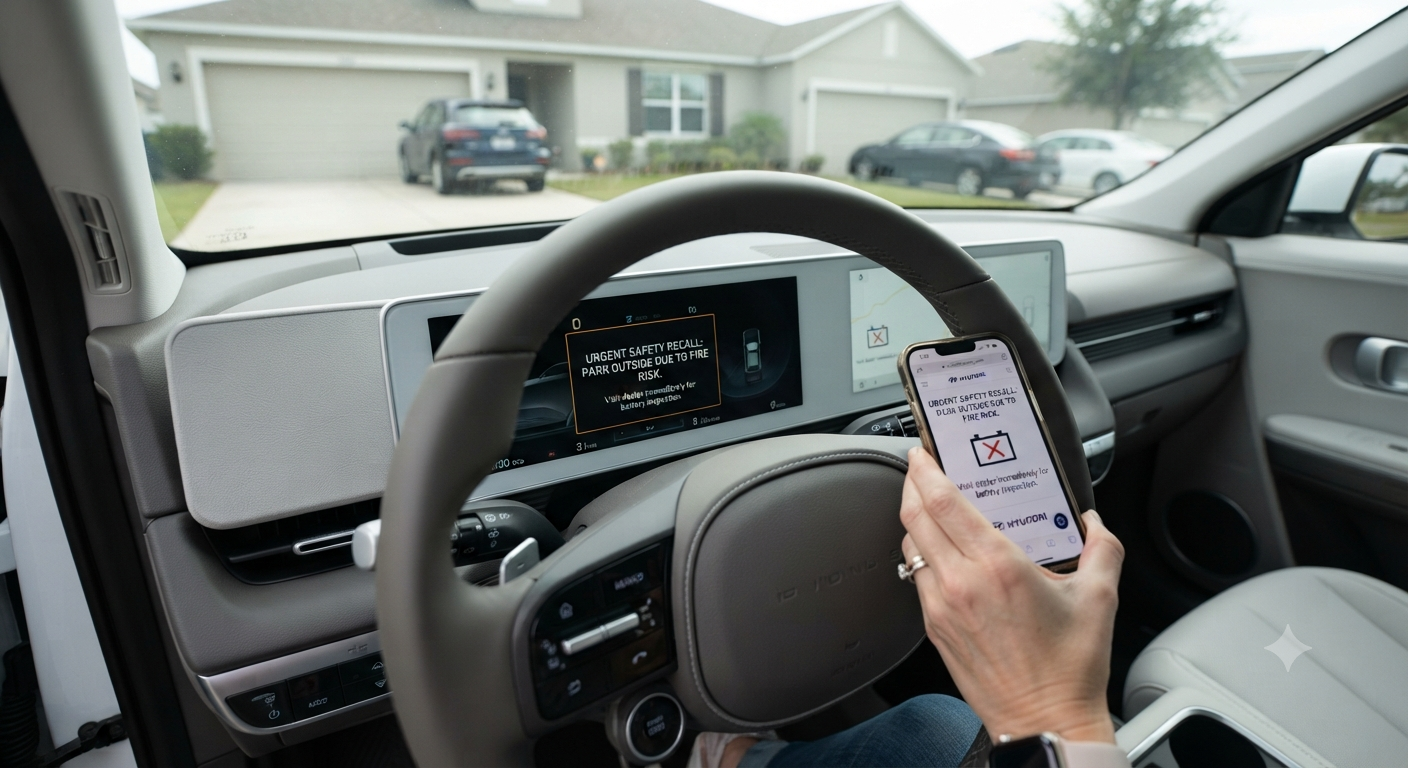
In a focused safety campaign initiated in July 2026, Hyundai and Kia have issued urgent recalls for a small but critical number of electric vehicles due to a high-voltage battery defect. While the total number of affected vehicles is limited to 14, the nature of the defect has prompted both manufacturers to issue an immediate “park outside” advisory for all impacted owners.
Understanding the Defect
The core of the issue lies in the high-voltage battery cells supplied by SK On Co.. Following an investigation, it was determined that certain battery modules produced during a specific timeframe contain misaligned electrodes.
This manufacturing deviation can lead to an internal short circuit within the battery cell. Such an anomaly can create localized heat, which may eventually lead to thermal runaway and, consequently, a vehicle fire. This risk persists regardless of whether the vehicle is in motion or parked.
Affected Models
The recall impacts specific units produced between late 2021 and late 2023. The following models are included in the safety campaigns:
- Hyundai IONIQ 5: Six vehicles from the 2023–2024 model years.
- Kia EV6: Seven vehicles from the 2022–2024 model years.
- Kia EV9: One 2024 model year SUV.
Safety Precautions and Recommendations
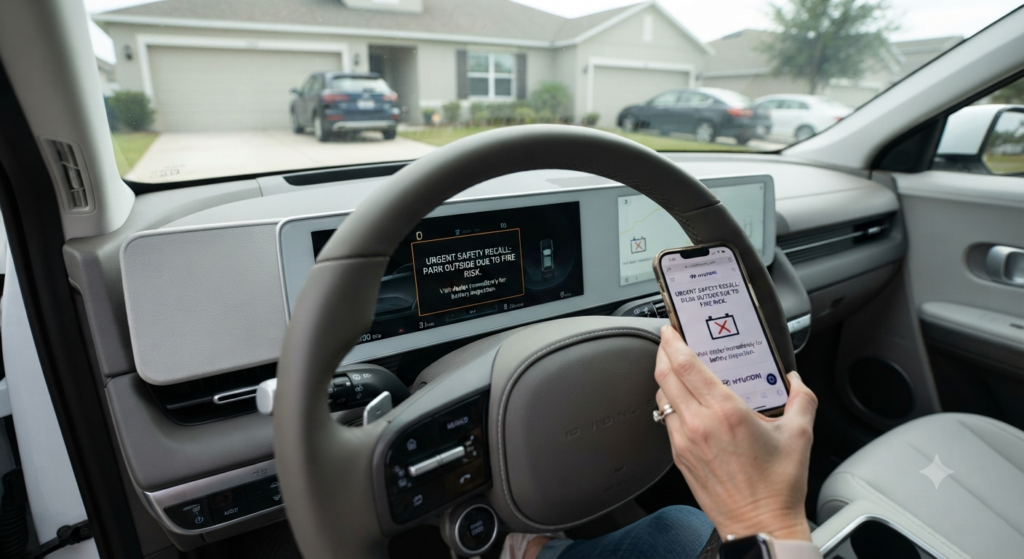
Because of the potential for fire, both Hyundai and Kia have provided strict safety instructions for owners of the affected vehicles until the necessary repairs can be performed.
- Park Outdoors: Owners are strongly urged to park their vehicles outside and away from homes, garages, or any other structures.
- Maintain Distance: As an additional safety measure, it is highly recommended to park away from other vehicles to prevent the potential for a chain-reaction fire.
- Limit Charging: Owners should limit the battery’s state of charge to a maximum of 80% to reduce stress on the cells.
- Monitor for Warning Signs: Hyundai, in particular, has advised owners to remain vigilant for signs of trouble, such as unusual burning smells, visible smoke, or warning lights on the vehicle’s dashboard.
The Remedial Path
Both manufacturers are committed to resolving this issue by replacing the compromised components.
- Repair Procedure: Dealers will replace the entire high-voltage battery system assembly with new units that contain properly aligned cells.
- Cost: All recall repairs will be performed at authorized dealerships entirely free of charge to the owners, regardless of the vehicle’s warranty status.
- Notification Timeline: Dealer notification letters were sent out on July 6, 2026. Kia owners are scheduled to receive notification letters on August 7, 2026, while Hyundai owners can expect their correspondence on August 31, 2026.
How to Verify Your Vehicle
Owners who wish to confirm if their specific vehicle is included in these safety campaigns can use the following resources:
- NHTSA Recall Tool: Visit the National Highway Traffic Safety Administration’s recall website and enter your vehicle’s 17-digit Vehicle Identification Number (VIN).
- Manufacturer Portals: You may also check the official Hyundai or Kia owner websites for recall status.
- Direct Contact:
- Kia: For questions, contact Kia customer service at 1-800-333-4542 (referencing recall number SC375).
- Hyundai: For questions, contact Hyundai customer service at 855-371-9460 (referencing recall number 305).
While incidents related to this defect have been reported in the South Korean market, there have been no reports of fires, crashes, or injuries in the United States to date. By initiating this voluntary recall, both manufacturers aim to address the risk proactively, ensuring the safety of their customers and the integrity of their electric vehicle fleets.





Leave a Reply