
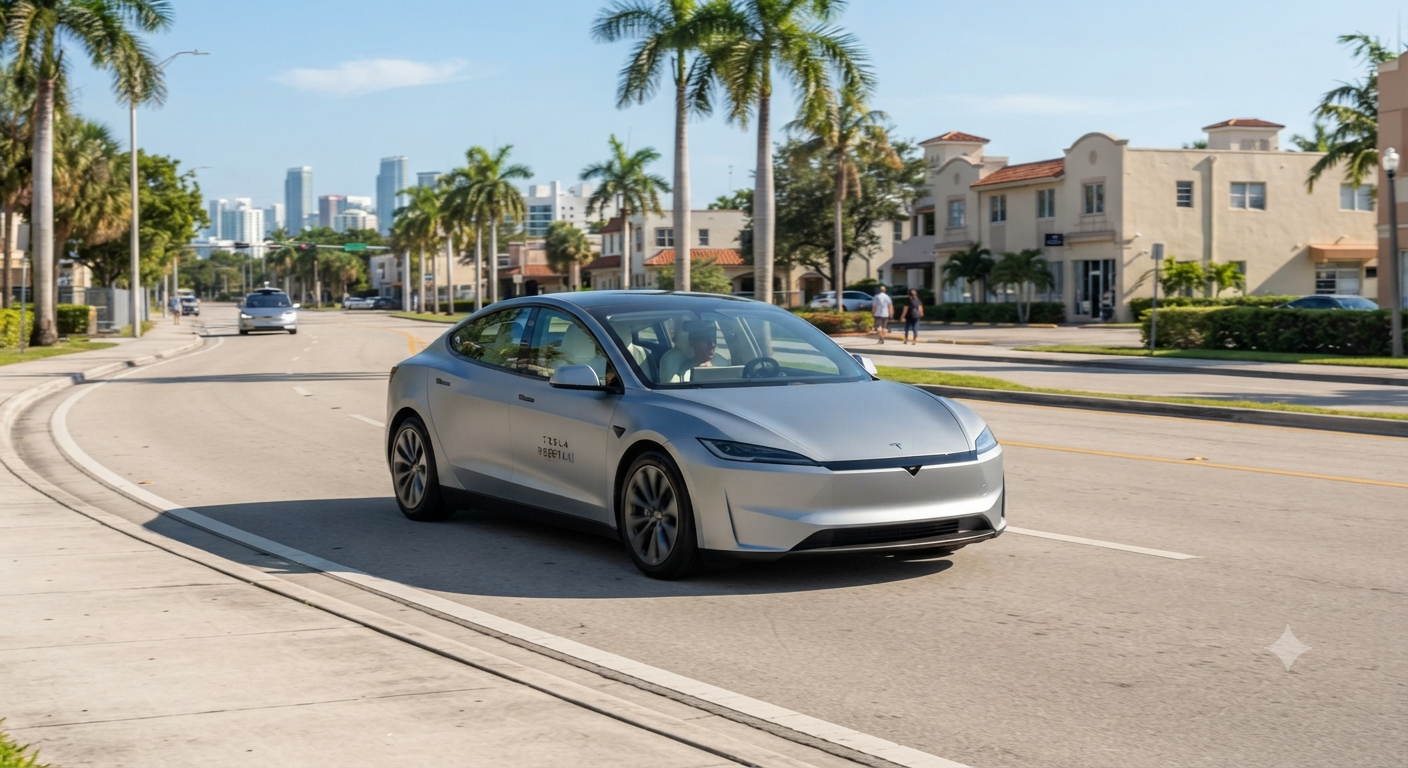
In the fast-evolving landscape of 2026, Tesla has found itself at a definitive inflection point. The company’s recent performance—marked by a staggering delivery record in the second quarter and the expansion of its unsupervised Robotaxi service into Miami—signals a profound strategic evolution. For years, Tesla was viewed primarily as an electric vehicle (EV) manufacturer; today, it is aggressively transitioning into an artificial intelligence and robotics powerhouse, with its autonomy program at the core of its long-term valuation.
A Blockbuster Second Quarter: Sustaining the Core
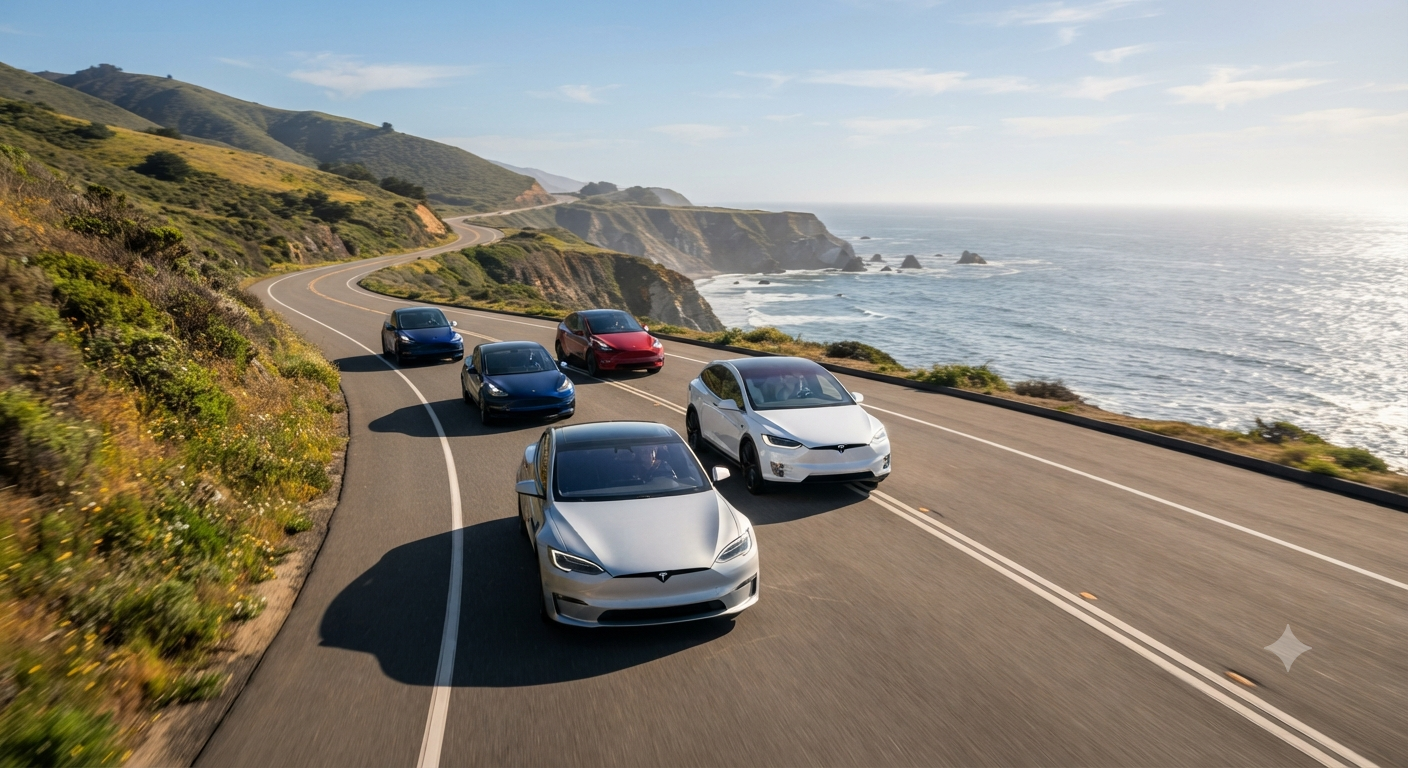
Tesla’s second quarter of 2026 serves as a powerful rebuttal to skeptics who questioned the company’s momentum earlier in the year. With a record 480,126 vehicles delivered, Tesla comfortably surpassed the consensus analyst estimate of approximately 406,600, representing a 25% increase year-over-year.
- Flagship Dominance: The Model 3 and Model Y remain the bedrock of the company’s volume, accounting for 467,762 of the total deliveries.
- Energy Storage Growth: Beyond vehicles, Tesla’s energy division deployed 13.5 gigawatt-hours (GWh) of battery storage, reinforcing the Megapack business as a critical, high-growth revenue stream that complements its automotive success.
- Market Validation: These figures have effectively stabilized concerns regarding demand, proving that Tesla can maintain scale despite intensifying competition from global automakers and shifts in government tax incentives.
While the delivery numbers provide a stable financial floor, they are no longer the entire story for Tesla. Investors are increasingly looking past hardware sales to the high-margin potential of software and autonomous services.
Miami: The New Frontier of Unsupervised Autonomy
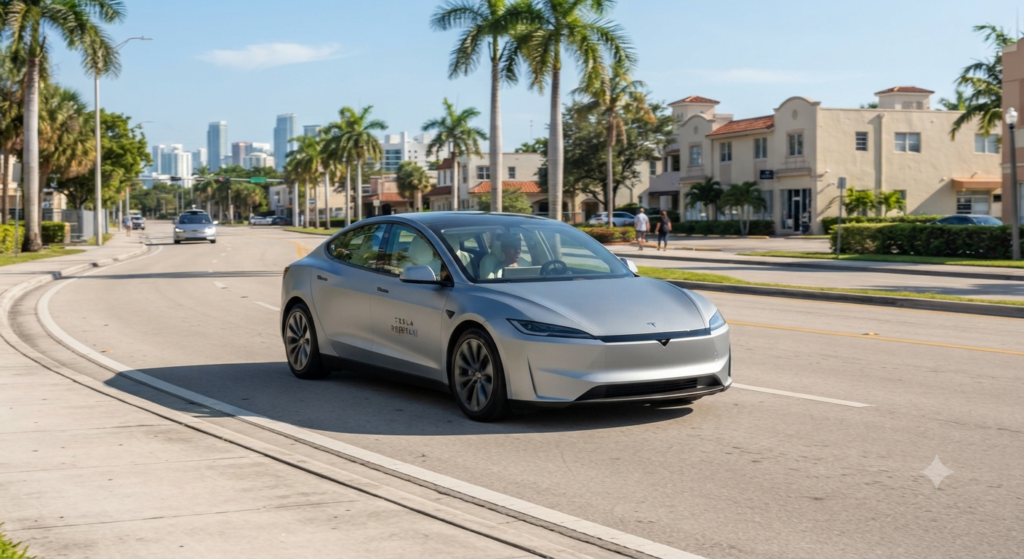
If Q2 deliveries provided the “stability” narrative, the launch of the Robotaxi service in Miami provides the “growth” narrative. Launched on July 3, 2026, in western Miami-Dade County, this expansion marks a significant milestone as the first commercial Robotaxi rollout for Tesla outside of Texas and California.
The “Unsupervised” Advantage
Perhaps the most crucial detail of the Miami launch is that it operates on an unsupervised basis. Unlike earlier pilot programs that required a safety monitor in the passenger seat, Tesla is now confident enough in its FSD (Full Self-Driving) software to remove the human safety minder entirely from the moment of launch.
- Geofenced Scaling: Much like its initial rollouts in Austin, Dallas, and Houston, the Miami service began in a compact 10–14 square mile zone. This conservative, data-driven approach allows Tesla to map complex urban environments and refine its AI architecture before expanding into high-traffic areas like downtown or airport zones.
- A Competitive Proving Ground: Miami is becoming a critical battleground for autonomous technology, with competitors like Waymo and Zoox already active in the region. Tesla’s camera-only approach, which is inherently more scalable and less sensor-dependent than its rivals’ LiDAR-heavy systems, is now being put to the ultimate test in real-world, high-tourist environments.
The “Autonomy-First” Narrative
Tesla is currently framing 2026 as its most significant investment year since the Model 3 ramp-up in 2018. However, the focus has shifted entirely from a mass-market sedan to an autonomous ride-hailing network.
Reallocating Capital
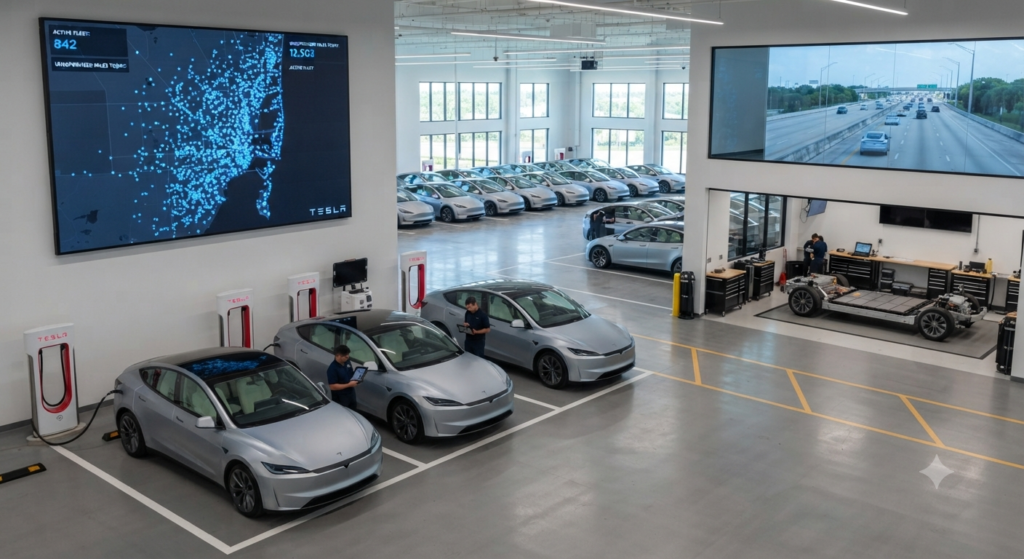
Tesla has guided capital expenditures exceeding $25 billion for the 2025–2026 period, with a substantial portion dedicated to four key pillars: AI compute, robotics (both the Optimus program and the autonomy stack), new manufacturing lines for the Cybercab, and the necessary infrastructure for Robotaxi operations.
The Path to 2027
While Elon Musk has cautioned that Robotaxi revenue may not be “super material” in 2026, the company expects it to become a significant driver of earnings in 2027. The narrative is clear:
- Consumer Base as Data Engine: The 1.3 million paid FSD subscribers continue to feed the neural networks that enable unsupervised city-wide expansion.
- Architectural Evolution: The upcoming FSD V15 release, described as a “full architectural overhaul,” is expected to be the final piece of the puzzle to power unsupervised Robotaxi operations at a national scale.
- Expansion Ambitions: With operations now in Austin, Dallas, Houston, and Miami, Tesla is aiming to bring unsupervised service to roughly a dozen states by the end of 2026, including potential targets like Orlando and Tampa.
Conclusion: A Pivot Validated by Data
The combination of record-shattering deliveries and the rapid, unsupervised deployment of Robotaxis confirms that Tesla is successfully executing a dual-track strategy. The automotive business provides the cash flow and the fleet-wide data required to perfect the “Autonomy-First” vision.
Investors are no longer betting on a potential future; they are observing the physical, operational expansion of a driverless network in real-time. As the geofences in Miami and other cities continue to widen, the conversation around Tesla is shifting from “Can they build enough cars?” to “How fast can they scale the autonomous network?” By the time 2026 closes, the success of this pivot will likely be measured not in quarterly vehicle counts, but in the number of states cleared for unsupervised, revenue-generating autonomous miles.
Tesla Q2 2026 deliveries jump 25%
This video provides an in-depth breakdown of Tesla’s record-breaking delivery numbers and explores the broader implications for the company’s growth in the current automotive landscape.

Leave a Reply